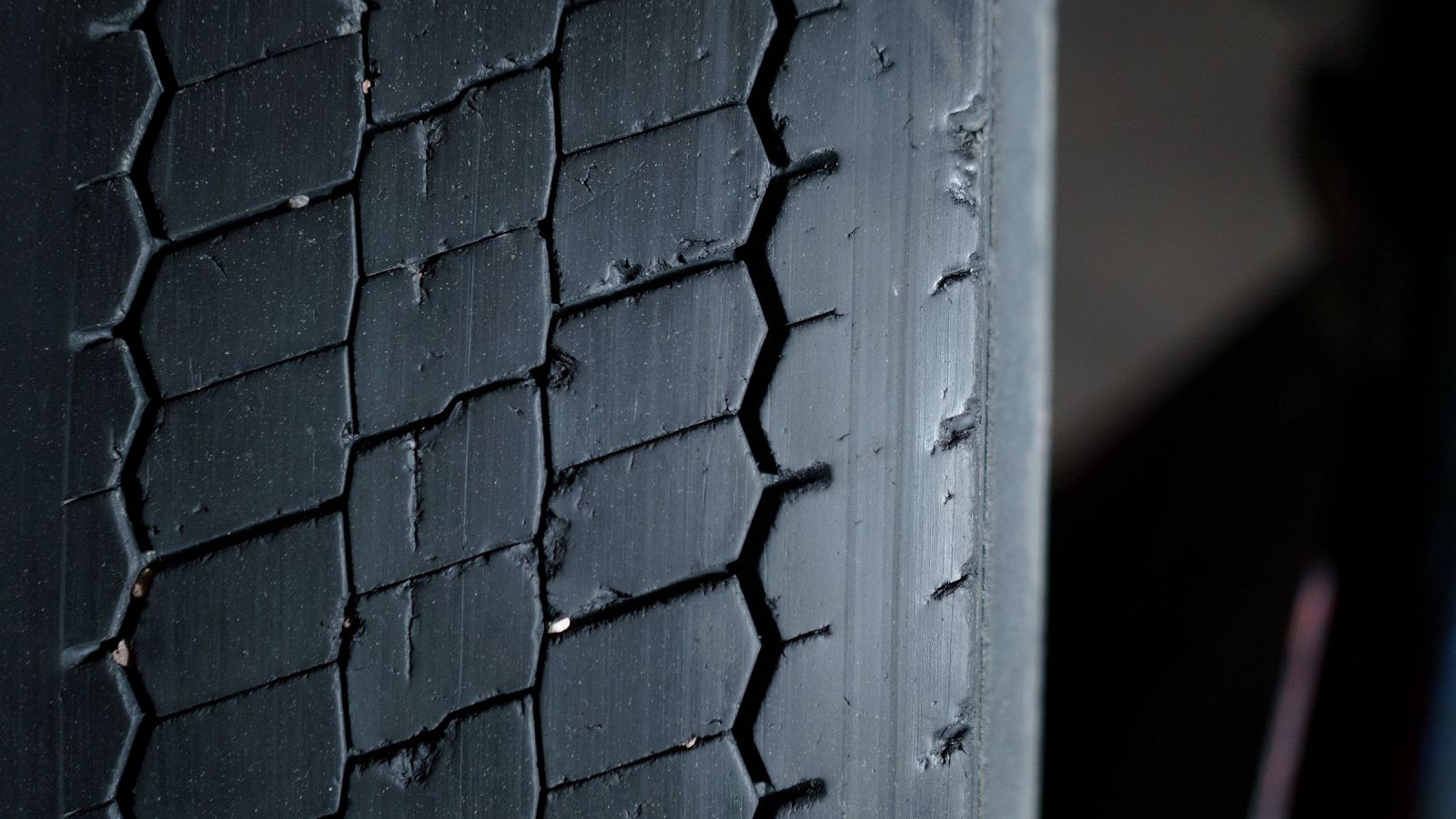
SH-TDF Waste code (AVV) 19 12 04
Tyre shred & TDF
Cut to size, matched to the burner
Shredded end-of-life tyres in defined particle sizes — as a substitute fuel for cement and lime works, or as feedstock for granulate production.
What is TDF?
TDF stands for tyre-derived fuel — a substitute fuel recovered from end-of-life tyres. Whole tyres are cut down to a defined particle size in several stages. Depending on the buyer, the steel wire is separated out or deliberately left in the material: in a cement rotary kiln the steel is not a contrary but goes into the clinker as a source of iron.
The calorific value of tyre material is well above that of hard coal. That makes TDF an economical alternative to fossil fuels for energy-intensive industries — and explains the steady demand in Asia and Africa.
Origin
The feedstock comes from the same collection as our baled material. Depending on particle size and volume, shredding is done in-house or at processing partners, whose output we inspect before loading.
Available versions
- Coarse shred as feedstock for further size reduction
- Medium particle sizes for kiln firing
- Fine particle sizes for burners with a narrow window
- Wire-free: steel largely separated out
- With steel: for cement kilns where the iron content is wanted
Specification
Calorific value, sulphur, ash and moisture content are analysed for every batch. As long as there is no current certificate for your specification, we quote no figure — you get the values with the quotation.
| Waste code (AVV) | 19 12 04 |
|---|---|
| Particle size | subject to agreement mm |
| Steel content (%) | on request |
| Textile content (%) | on request |
| Net calorific value (NCV) (MJ/kg) | on request |
| Sulphur (%) | on request |
| Ash (%) | on request |
| Moisture (%) | on request |
| Bulk density (kg/m³) | on request |
Delivery form & logistics
| Packing | Loose (bulk) or in big bags |
|---|---|
| Mode of shipment | 40 ft container, walking-floor trailer, bulk vessel |
| Load weight per container (t) | on request |
| Stowage requirement (m³/t) | on request |
| Delivery terms | FCA, FOB, CIF, CFR, DAP — Incoterms 2020 |
| Availability | subject to agreement, running contracts possible |
What the material does not contain
A substitute fuel that upsets the kiln or breaches limit values cannot be sold. Excluded are:
- Rims and foreign metal parts
- Plastic, wood and household waste fractions
- Components containing PVC
- Material contaminated with oil or chemicals
- Hazardous waste of any kind
- Soil, stones and mineral foreign matter above the agreed tolerance
How buyers use it
-
Cement rotary kiln
Substitution of coal and petcoke; the steel content is bound into the clinker.
-
Lime works and power plants
Used as a secondary fuel in permitted combustion plants.
-
Granulate production
Further processing into rubber granulate and powder once steel and textile have been separated out.
-
Pyrolysis
Used as feedstock in pyrolysis plants to recover oil, gas and rCB.
Frequently asked questions
- With or without steel — which is better?
- Your process decides that. In a cement rotary kiln the steel is wanted and replaces iron carriers. In almost every other combustion plant, and in granulate production, it is a nuisance and gets separated out.
- Why is there no calorific value on the data sheet?
- Because a calorific value without the analysis behind it is worthless. We give you the value of the batch you are buying, with a certificate — not a catalogue figure that does not match your delivery.
- Can you commit to a fixed particle size?
- Yes, within an agreed screen curve. Give us the specification of your burner and we will set the shredding to match.
Waste shipment
Which rules apply to the export of our materials — and which part of it we take on.
Our grades
-
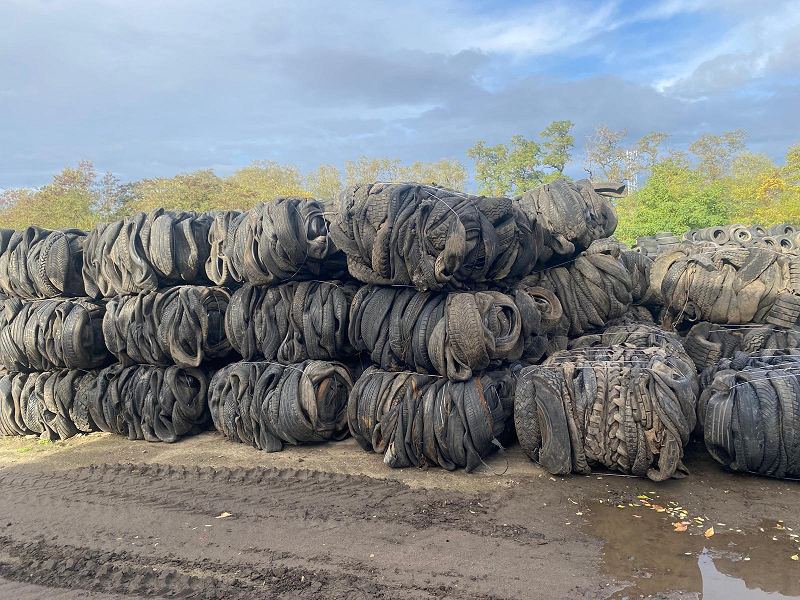 Baled end-of-life tyres
Whole end-of-life tyres pressed into wire-bound bales — the standard form for sea transport.
Baled end-of-life tyres
Whole end-of-life tyres pressed into wire-bound bales — the standard form for sea transport.
-
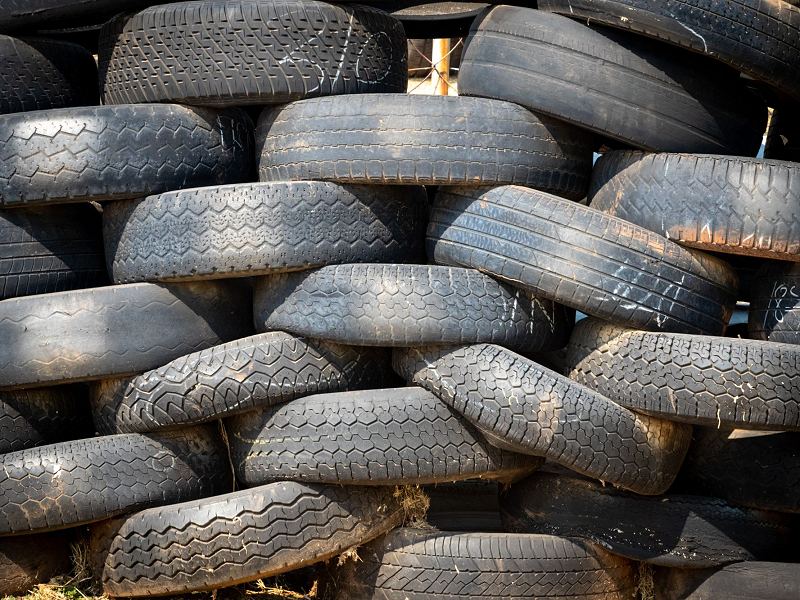 Part-worn tyres & casings
Part-worn tyres with tread and retreadable casings, sorted by tread depth and condition.
Part-worn tyres & casings
Part-worn tyres with tread and retreadable casings, sorted by tread depth and condition.
-
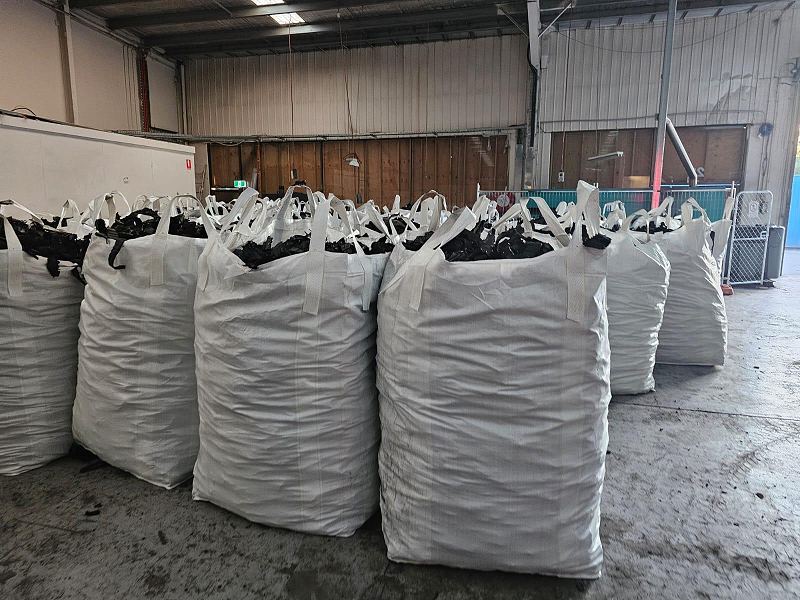 Rubber granulate & rubber powder
Rubber granulate and rubber powder recovered from end-of-life tyres in defined particle sizes.
Rubber granulate & rubber powder
Rubber granulate and rubber powder recovered from end-of-life tyres in defined particle sizes.
-
 Plastics
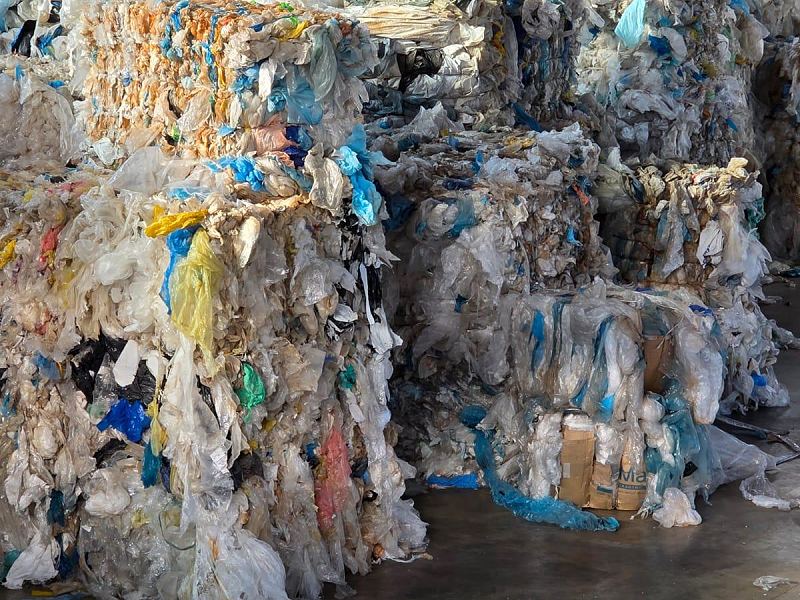
Films, rigid plastics and mixed fractions, baled and separated by polymer.
Plastics
Films, rigid plastics and mixed fractions, baled and separated by polymer.
-
 Solid recovered fuel (SRF/EBS)
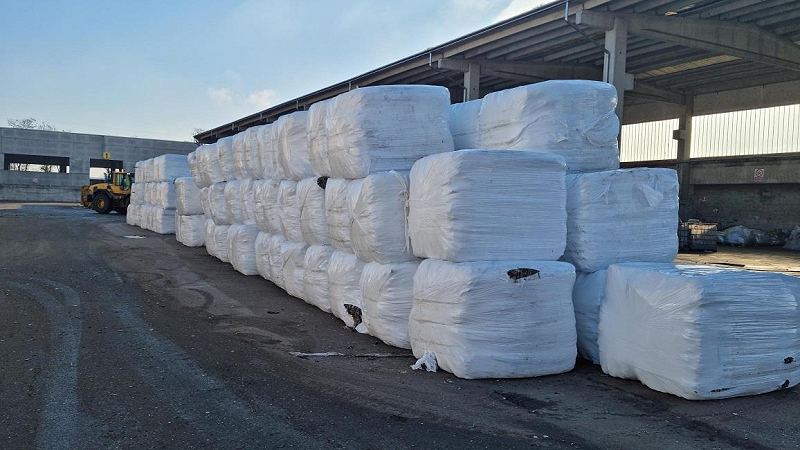
High-calorific fractions from commercial and industrial waste, classified to EN ISO 21640.
Solid recovered fuel (SRF/EBS)
High-calorific fractions from commercial and industrial waste, classified to EN ISO 21640.
Direct contact
Request a quotation
Give us the product, the volume, the destination port and the delivery term you want — you will receive a quotation with specification and loading plan.
Send an enquiry