SH-ELT-B Waste code (AVV) 16 01 03
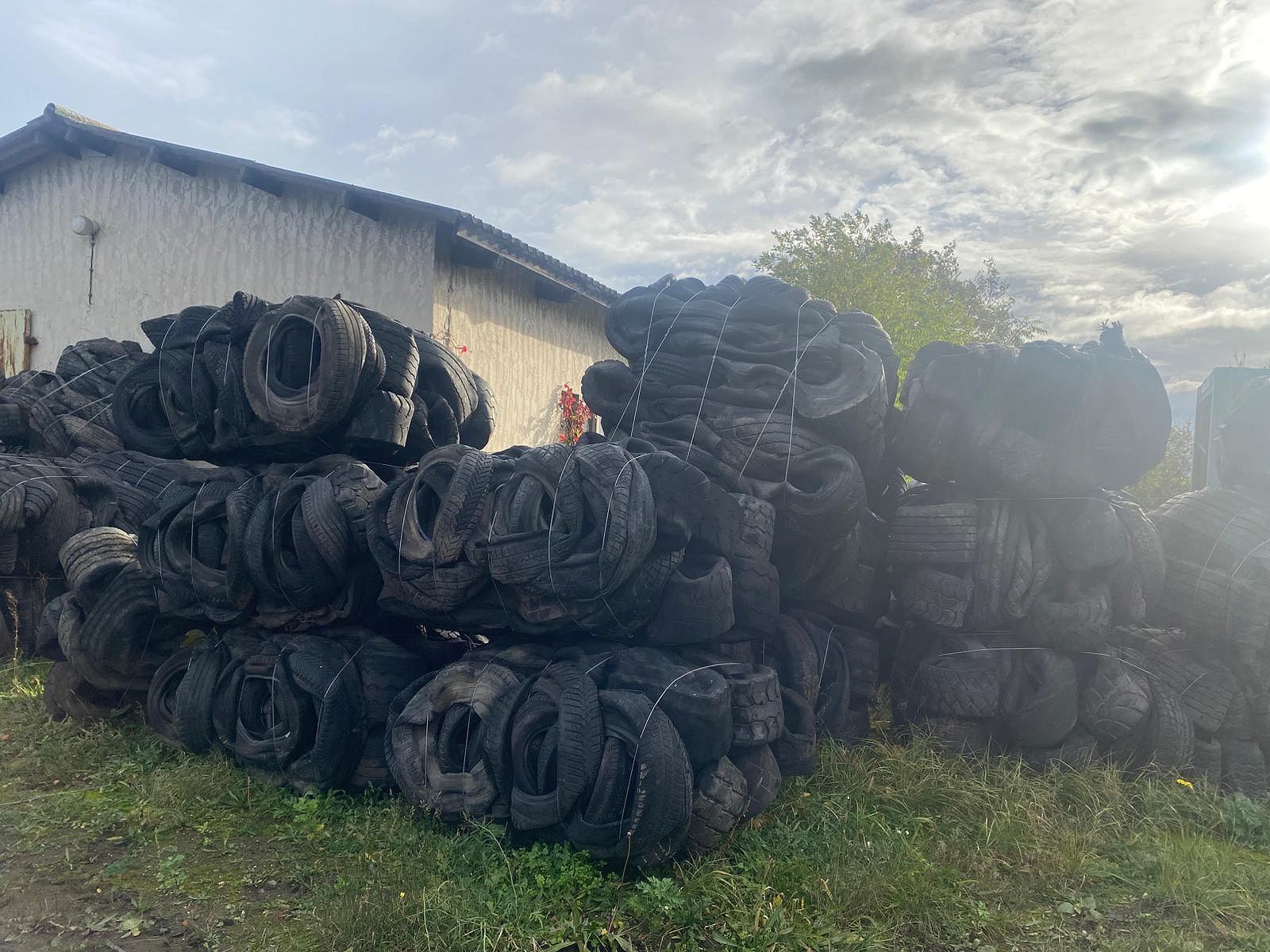
Baled end-of-life tyres
Pressed, wire-bound, container-ready
Whole end-of-life tyres, pressed into transport-ready bales on our own yard. The most compact form in which to move ELT by sea.
What are baled end-of-life tyres?
Bales are made by compressing whole car and van tyres into a rectangular block in a hydraulic press and binding the block with wire. The reason is purely commercial: loose tyres are mostly air. With loose tyres a sea container is full by volume long before it is full by weight. Pressed, the ratio turns around — the container is loaded up to its permitted payload, and the freight cost per tonne falls sharply.
For the receiver nothing about the material changes: the bale is cut open at destination and the tyres go into processing one by one. For us the bale is the form that makes end-of-life tyres exportable in the first place.
Origin
Our volumes come from two sources. First, our own intake: tyre dealers, garages, car dealerships and waste management companies deliver end-of-life tyres to our yard, or we collect them. Second, purchasing from partner operations in Germany, whose material we inspect before we take it on.
Typical composition
- Car and van tyres, steel-belted and non-steel-belted
- Natural and synthetic rubber as the main constituent
- Steel cord in the belt and the bead core
- Textile cord made from man-made fibres
- Fillers, mainly carbon black
Specification
The table shows which parameters we document for each batch. Binding values for your actual delivery are stated in the quotation or in the certificate of analysis.
| Waste code (AVV) | 16 01 03 |
|---|---|
| Basel code | B3140 (green-listed waste) |
| Tyre type | Car / van, truck on request |
| Bale size (L × W × H) (mm) | on request |
| Bale weight (kg) | on request |
| Tyres per bale (pcs) | on request |
| Binding | Wire, several turns around the bale |
| Rim content | free of rims |
| Contraries (%) | on request |
| Moisture (%) | on request |
Delivery form & logistics
| Packing | Pressed, wire-bound bales |
|---|---|
| Mode of shipment | 40 ft high-cube container; bulk loading on request |
| Load weight per container (t) | on request |
| Loading ports | Hamburg, Bremerhaven; others by arrangement |
| Delivery terms | FCA, FOB, CIF, CFR — Incoterms 2020 |
| Availability | continuous, all year round |
What our bales do not contain
Contaminated material costs the buyer time and money and puts the import at risk. Before baling we therefore exclude:
- Rims and any metal parts other than the steel cord inside the tyre
- Tyres contaminated with oil, fuel or chemicals
- Tyres with filling material (foam, liquid, concrete)
- Agricultural and earthmover tyres, unless expressly agreed
- Household waste, packaging and other foreign matter
- Hazardous waste of any kind
How buyers use it
-
Granulate production
Size reduction into shred, granulate and powder; separation of steel and textile.
-
Pyrolysis
Thermochemical breakdown into pyrolysis oil, gas and recovered carbon black (rCB).
-
Cement industry
Used as tyre-derived fuel in the rotary kiln; the steel content goes into the clinker.
-
Construction uses
Whole tyres or bales used in earthworks and hydraulic engineering, where nationally permitted.
Frequently asked questions
- Why press the tyres at all?
- Because loose tyres ship almost nothing but air. Pressed, the container is filled up to its permitted payload instead of just running out of space — and that cuts the sea freight per tonne considerably.
- Do end-of-life tyres need a permit to be shipped?
- End-of-life tyres are classified as green-listed waste under Basel code B3140. Within the EU and to OECD countries the information procedure under the EU Waste Shipment Regulation normally applies. For non-OECD countries we check the import conditions of the country of destination case by case.
- Can you bale truck tyres?
- Truck tyres behave differently in the press than car tyres. Talk to us — we will tell you which delivery form makes more sense for your volume.
- How quickly can you load?
- That depends on volume, destination port and delivery term. Give us those three details and you get a concrete loading plan instead of a blanket answer.
Waste shipment
Which rules apply to the export of our materials — and which part of it we take on.
Our grades
-
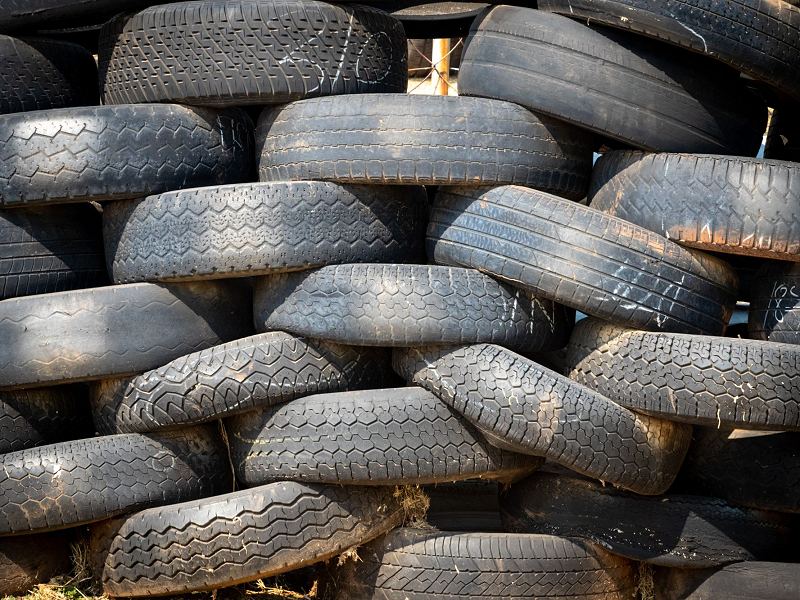 Part-worn tyres & casings
Part-worn tyres with tread and retreadable casings, sorted by tread depth and condition.
Part-worn tyres & casings
Part-worn tyres with tread and retreadable casings, sorted by tread depth and condition.
-
 Tyre shred & TDF
Shredded end-of-life tyres in defined particle sizes, with or without wire separation.
Tyre shred & TDF
Shredded end-of-life tyres in defined particle sizes, with or without wire separation.
-
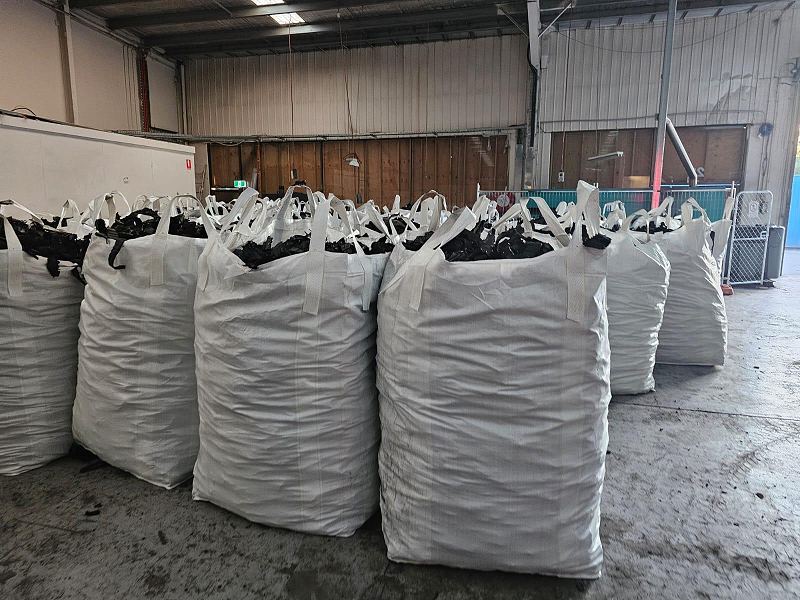 Rubber granulate & rubber powder
Rubber granulate and rubber powder recovered from end-of-life tyres in defined particle sizes.
Rubber granulate & rubber powder
Rubber granulate and rubber powder recovered from end-of-life tyres in defined particle sizes.
-
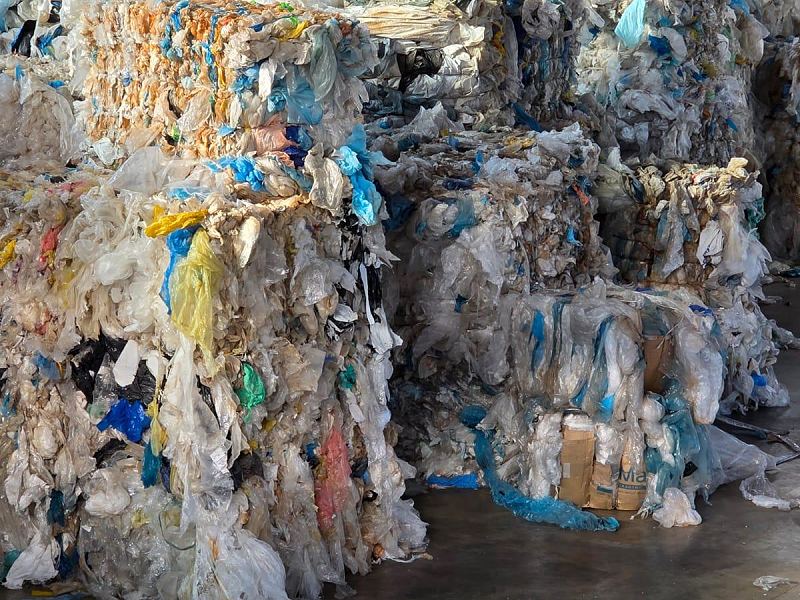 Plastics
Films, rigid plastics and mixed fractions, baled and separated by polymer.
Plastics
Films, rigid plastics and mixed fractions, baled and separated by polymer.
-
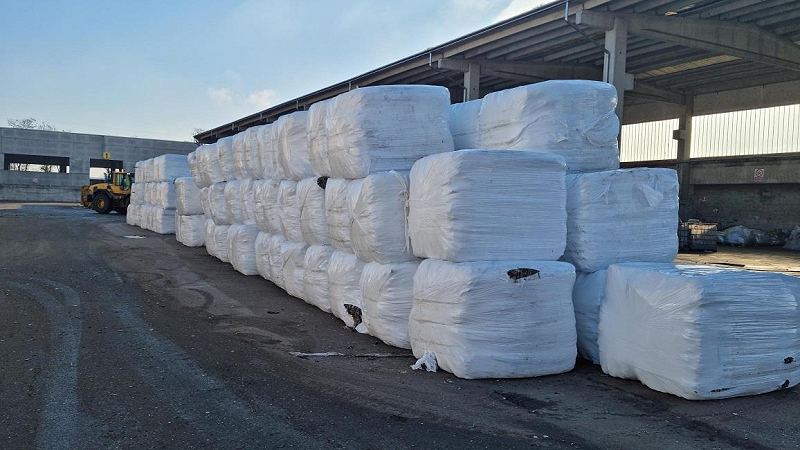 Solid recovered fuel (SRF/EBS)
High-calorific fractions from commercial and industrial waste, classified to EN ISO 21640.
Solid recovered fuel (SRF/EBS)
High-calorific fractions from commercial and industrial waste, classified to EN ISO 21640.
Direct contact
Request a quotation
Give us the product, the volume, the destination port and the delivery term you want — you will receive a quotation with specification and loading plan.
Send an enquiry