What TDF means
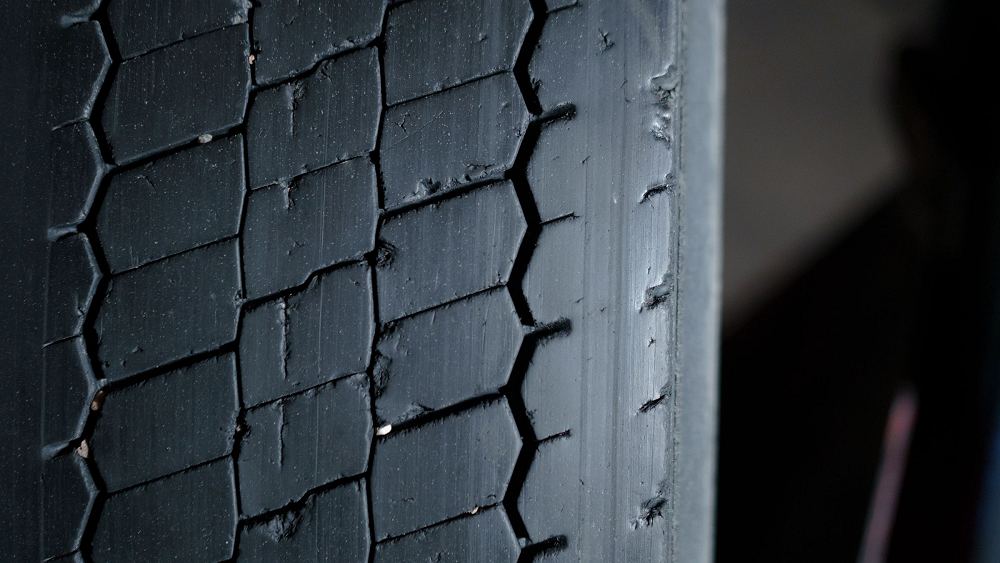
TDF stands for tyre derived fuel. It means material from end-of-life tyres that is not processed further into granulate or pyrolysis oil, but used directly as a fuel. The tyre is not changed chemically for this. It is only brought to the particle size that the buyer's feeding system requires.
The fuel property sits in the material itself. A tyre consists mainly of natural and synthetic rubber, plus carbon black as a filler, process oils, steel cord and textile cord. Rubber and carbon black are hydrocarbons with a high energy content. The waste tyre is therefore a fuel before it has been processed at all.
The term TDF, however, says nothing about a particular quality. It describes a use, not a standard. What a buyer understands by TDF is set out in its plant specification and in its permit, not in any generally binding norm. Two offers for TDF can therefore mean completely different materials.
Why a cement kiln in particular
A rotary cement kiln is not an ordinary furnace. The material being burnt reaches around 1450 degrees C, the flame temperature is higher still, and the gas stays in that range for several seconds. Organic compounds are broken down completely under such conditions.
A second point is decisive: the kiln is chemically alkaline. The raw meal consists mainly of limestone. Acidic constituents of the fuel, sulphur compounds among them, are bound in the process instead of being released through the stack.
From this follows the real reason why tyre material including the steel cord may go into the kiln. Ash and iron are not left over as a residue. They enter the mineral matrix of the clinker. Iron is a regular constituent of the clinker phases and is even bought in as a corrective material in conventional operation. The steel from the tyre therefore replaces a raw material instead of creating disposal costs.
- Process temperature around 1450 degrees C in the burning material, clearly higher in the flame
- Long residence time of gas and solids in the hot zone
- Alkaline environment from limestone, which binds acidic flue gas constituents
- Ash and iron are bound into the clinker, so no residue is left to dispose of
The difference from a power plant or an incinerator
In a coal-fired power plant, heat is converted into electricity. Everything that does not burn is left as ash and slag and has to be recovered or landfilled. Steel cord is not a raw material there but a contaminant: it damages mills and conveying equipment and ends up in the residue.
A waste incineration plant works at markedly lower temperatures, usually in the range of 850 to 1000 degrees C, and serves a different purpose. Here too, slag as well as boiler and filter ash arise and are treated separately. The tyre steel goes into the slag and is at best recovered magnetically afterwards.
The cement kiln is the only one of the three processes in which the fuel is also a raw material. That is why it accepts wire-bearing material that other plants reject, and that is why it is the most important outlet for TDF. Anyone offering tyre material usually sells the with-wire grade to a cement works and the wire-free grade to all other users.
Size grades and who sets them
Particle size is not a matter of taste. It follows from the feeding system of the plant. A kiln with a double flap gate at the kiln inlet takes whole tyres. A calciner with a dosing belt and a rotary valve needs an even particle size, otherwise the feed blocks or the dosing fluctuates and with it the kiln operation.
The following designations are common in the market. They are not a standard, and the boundaries shift depending on the plant and the country. What is binding is always the buyer's specification.
| Designation | Typical particle size | Steel cord | Usual feed point |
|---|---|---|---|
| Whole tyres | not shredded | contained | Kiln inlet or calciner via a gate |
| Coarse shred | around 200 to 300 mm | contained | Kiln inlet, robust feeding systems |
| Standard TDF chips | around 50 to 100 mm | with or without | Calciner, secondary feed at the main burner |
| Fine chips | around 10 to 30 mm | usually wire-free | Main burner, users outside the cement industry |
Wire-free or with wire
Steel cord is separated magnetically after shredding, in several stages. A first overband magnet sits after the primary shredder, another one after each further size reduction step. The finer the material, the better the wire releases from the rubber and the higher the separation rate.
Wire-free material is therefore more expensive, for two reasons. It costs additional shredding stages and with them energy and wear. And it costs yield: the separated steel leaves the product as scrap, together with the rubber that stays attached to it. Both show up in the price per tonne.
For a cement kiln the wire is usually unproblematic, as long as the feeding equipment can convey it. For users outside the cement industry it is normally an exclusion criterion. Every enquiry should therefore state whether wire-free material is required and what residual wire content is acceptable.
What the buyer's permit determines
A cement plant may not use whatever it likes. Its operating permit sets out which input materials are allowed, under which waste codes they are recorded, which quantities may be burnt per unit of time, and which emissions are monitored in what form.
For the supplier this has an uncomfortable consequence: a specification that a plant is not legally allowed to accept is worthless, even if the material fits technically. The first question to a new buyer is therefore not what it could use, but what its permit says.
Permit and plant specification together usually govern the following points.
- Permitted waste codes and material descriptions
- Maximum quantities per hour, per day or per year and the permitted substitution rate
- Limit values for pollutants, in particular sulphur, chlorine and heavy metals
- Requirements for particle size, moisture and contaminants so the feeding equipment can work
- Sampling, analysis and documentation per delivery or per batch
How TDF compares with coal
The comparison with hard coal is the usual reference, because coal is the fuel that TDF replaces. The energy content per kilogram of tyre material is in the order of hard coal and above. The ranges quoted in the sector vary considerably depending on tyre type, wire content and moisture. What counts is always the buyer's analysis of the actual batch and not a catalogue figure.
With the ash content the usual logic is reversed. Coal ash is a disposal item for a power plant, but a raw material for a cement kiln. The same applies to tyre ash and to the iron from the cord. In a cement works it is therefore not the ash content as such that is assessed, but its composition.
With carbon dioxide the origin of the carbon matters. Part of the rubber is natural rubber and counts as biogenic under the common accounting rules. Fossil CO2 emissions per unit of energy input are therefore generally lower than with coal. How large a biogenic share may be applied depends on the accounting framework in question.
Every kiln operator watches two parameters in particular. Sulphur enters the circuit between kiln and preheater and can cause build-ups there. Zinc comes from the zinc oxide in the rubber compound and is bound into the clinker. Both are manageable, but both help determine what share of total firing TDF can reach.
We supply tyre material in the forms that the buyer's feeding equipment requires, and agree particle size, wire content and documentation with the plant before the first loading.
Frequently asked questions
- Is TDF a standardised fuel?
- No. TDF describes a use, not a standard. What is permitted is set by the plant specification and the operating permit of the buyer. A data sheet with no reference to a specific plant therefore says very little.
- Does the steel cord have to be removed before use?
- In a cement kiln usually not, because the iron is bound into the clinker. What matters is whether the feeding system can convey wire-bearing material. Outside the cement industry, wire-free material is normally required.
- Which particle size should I ask for?
- The one the buyer's feeding system requires. It makes sense to establish the feed point first: a gate at the kiln inlet, a dosing belt to the calciner, or a secondary feed at the main burner. The size grade then follows by itself.
- What is the calorific value of the material?
- A reliable figure comes from the analysis of the actual batch and not from a brochure. In the sector, tyre material is traded in the order of hard coal and above. The real values depend on tyre type, wire content and moisture.