Which polymers are traded and where they come from
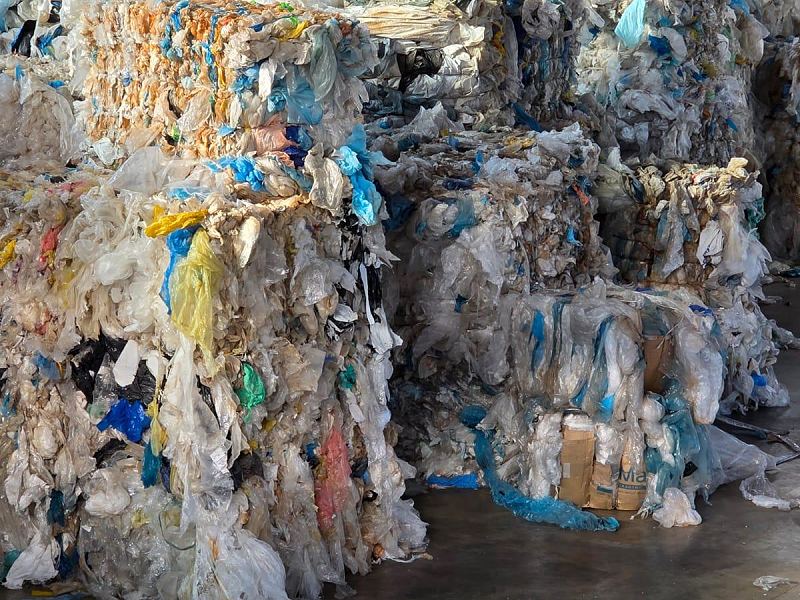
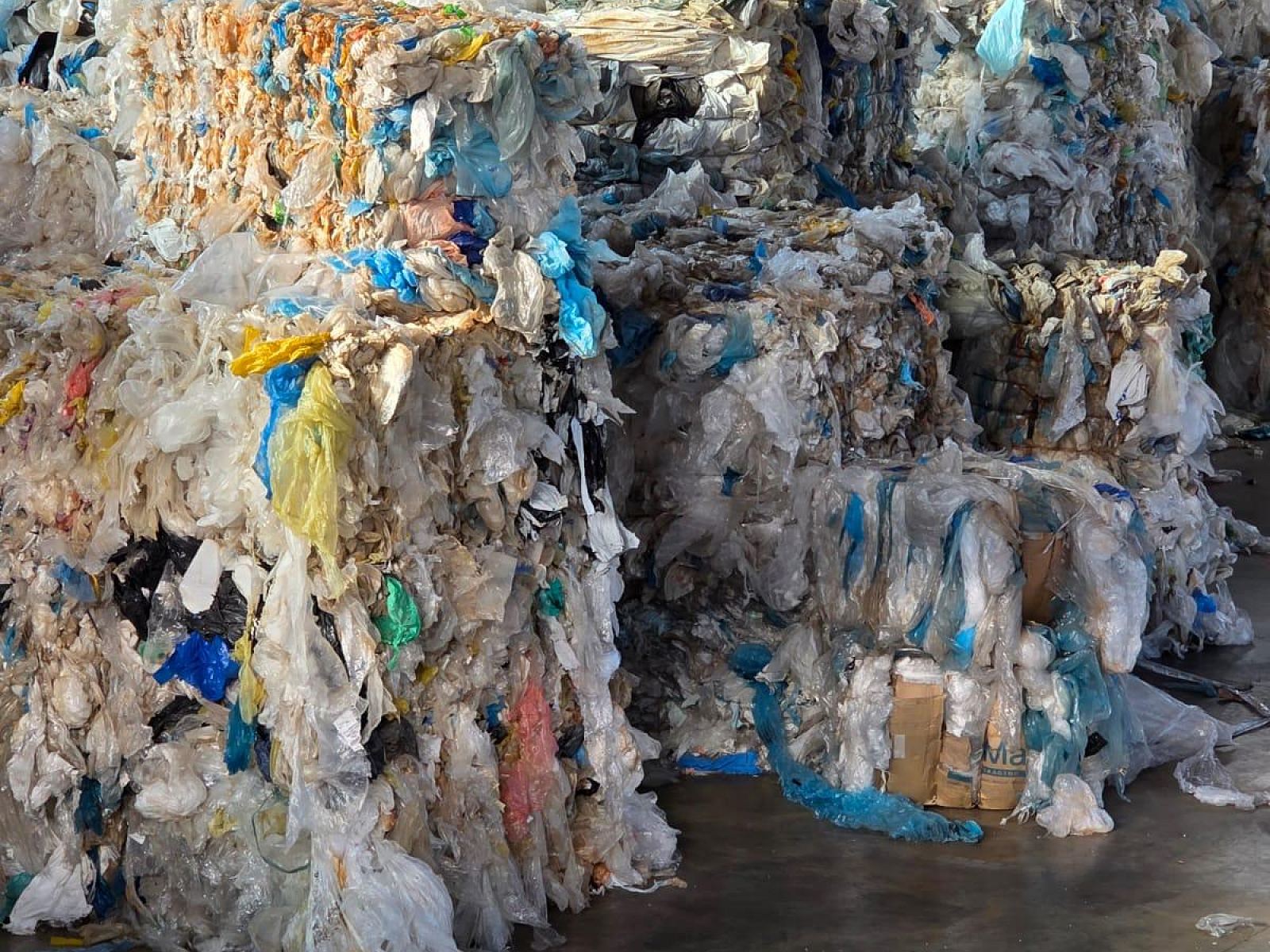
Plastic scrap is not a material but a collective term for dozens of streams that differ in polymer, origin, trading form and contamination. Two loads both sold as film can be far apart in value. Buyers and sellers should always state four things together: polymer, origin, trading form and sorting purity.
The main traded polymers are polyethylene in its LDPE and HDPE variants, polypropylene, polystyrene, PET, ABS and PVC. LLDPE is usually treated as a film grade of its own, because stretch film behaves differently from shrink film. Each polymer has typical origins, and the origin often says more about the expected contamination than the polymer name.
The table summarises where the streams come from, how they are traded and what to watch when buying.
| Polymer | Typical origin | Usual trading form | What matters when buying |
|---|---|---|---|
| LDPE | Transport and shrink film from retail and industry | Bales, regrind, regranulate | Colour separation clear, coloured or mixed, printed share, adhesive residue, moisture |
| LLDPE | Pallet stretch film | Bales, regrind | Labels and adhesive tape, dust from the pallet, melt flow index |
| HDPE | Drums, crates, pipe, bottles, jerrycans | Bales, regrind, washed flakes, regranulate | Former contents of the containers, metal handles and seals, colour mix |
| PP | Big bags, crates, bumpers, fibres and nonwovens | Bales, regrind, flakes, regranulate | Foreign polymer from seams and liners, filler content, melt flow index range |
| PS and EPS | Packaging, housings, moulded parts | Bales, briquettes, regrind | Volume and compaction, foam share, foreign colours |
| PET | Bottles, trays, strapping band | Bales, washed flakes | Separation of bottle and tray, PVC content, colour, label and adhesive residue |
| ABS and PC/ABS | Housings from electrical and vehicle parts | Regrind, regranulate | Coatings and electroplating, flame retardants, colour mix |
| PVC | Profiles, pipe, film, floor coverings | Regrind, regranulate | Keep separate: in a mixed stream PVC is a contaminant, not a raw material |
Codes 1 to 7 are a sorting aid
The numbers inside the triangle on packaging, 1 for PET, 2 for HDPE, 3 for PVC, 4 for LDPE, 5 for PP, 6 for PS and 7 for everything else, are a marking that supports sorting. They help to place a stream roughly. As a contractual basis they are unsuitable.
The reason is simple: the code names the main polymer but not the type, the melt flow index, the additives, the colour or the contamination. Two loads carrying the number 5 can be a big bag fabric with polyester seams and a regrind from injection moulded crates. For the processor those are two different raw materials.
Number 7 is the vaguest. It stands for everything outside the first six groups: ABS, PC, PA, composites and blends. Material offered only as number 7 cannot be valued without further information.
Trading forms and their effect on price
The trading form often drives the price as much as the polymer does. Every processing step from bale to regranulate costs energy, labour and yield loss, and every step also cuts the buyer's risk.
It matters to state the trading form together with its own parameters. A regrind without a grain size and without a dust content is as vague as a bale without a weight.
- Bales: pressed and untreated. To be agreed: bale weight, bale dimensions, binding and moisture.
- Regrind or mill: size-reduced and unwashed. To be agreed: grain size across the sieve stack, dust and fines content, foreign polymer content and metal residue.
- Flakes: size-reduced and dry-cleaned. To be agreed: flake size, foreign colour content and label residue.
- Washed flakes: wet-cleaned and dried. To be agreed: residual moisture, residues from the wash water and odour.
- Regranulate: melted, filtered and pelletised. To be agreed: melt flow index with a range, colour, filter fineness and the share of unmelted particles.
Sorting purity is a cliff, not a slope
A bale at 98 percent LDPE and a bale at 90 percent LDPE are not one product in two quality grades. They are two different products. The reason is the buyer's process tolerance: a line whose melt filter is designed for a certain foreign content runs stably up to that limit and not beyond it. The transition is a cliff, not a slope.
In practice that means the difference of 8 percentage points does not cost 8 percent of the price. It can change the set of buyers completely. Material too impure for film extrusion goes into thick-walled applications, into profiles or into energy recovery, and different prices apply there.
A figure for sorting purity without a method is worthless. Agree how it is tested, hand sorting of a defined sub-sample with the fractions weighed out is common in the market, and what counts as foreign content: other polymers only, or also paper, metal and adhering residues.
Post-industrial and post-consumer
Post-industrial covers waste from production and from commercial circulation: start-up material, trim, rejects, transport film from a warehouse, used big bags. The origin is known, the colour is usually uniform, contamination is low, and the stream can be traced back to its source.
Post-consumer covers waste after use by end consumers, so collected material from households and retail. The origin is mixed, the material is printed, carries labels, closures and residues of its former contents, and smells accordingly. In return the volumes are larger and the purchase price is lower.
The difference is not a judgement but a question of cost. Post-consumer material needs washing, sorting, drying and often odour treatment, and those costs sit with the buyer. Sellers should therefore not expect post-industrial prices, and buyers should calculate the reprocessing cost before bidding.
Contaminants and moisture
Contaminants do not act in proportion but through thresholds. Half a percent of the wrong substance can make a batch unusable, while five percent of a harmless companion material only pushes the price down.
Moisture is a double problem. It is paid for as weight, and it disturbs processing, because water causes bubbles and degradation during extrusion. Bales left in the rain take up water along the cut edges and do not dry out in the container. In a warm container the moisture condenses on the roof and drips back onto the goods, which encourages mould and odour.
The list below names the contaminants that cause most claims in practice, and what they do.
- PVC: releases hydrogen chloride at processing temperature, discolours the melt and attacks the equipment. In a polyolefin mix PVC is the most expensive contaminant.
- PET and other high-melting polymers: do not melt in a polyolefin process and show up as unmelted specks in the product.
- Paper, labels and adhesives: burn, create odour and smoke and leave residues in the filter.
- Metal parts: handles, closures, staples and wires damage mills and screws.
- Sand, soil and glass: act abrasively and shorten the service life of screw and barrel.
- Cross-linked material and thermosets: cannot be melted and remain as hard particles in the product.
- Black colouring with carbon black: is not detected by near-infrared sorting, because the pigment absorbs the light.
Why import rules are tighter for plastics
Plastic waste is governed by tighter rules than end-of-life tyres or rubber. The basis is the plastic waste amendments to the Basel Convention, in force since 1 January 2021. They added three entries: Y48 for plastic waste subject to control, A3210 for hazardous plastic waste and B3011 for streams that may still be shipped without notification. B3011 replaced the former entry B3010.
The core of B3011 is narrow. Only almost single-polymer plastic waste destined for recycling and practically free of contamination and other waste types stays green-listed. Certain mixtures of PE, PP and PET are also covered, but only under narrow conditions. Everything else falls under Y48 and needs the notification procedure with prior consent from the states involved.
National rules in the importing countries come on top. Several states have introduced import bans, licence systems for importers and pre-shipment inspection requirements. China's import ban from 2018 reshaped the market: the streams spread to other regions, and the authorities there introduced quotas and controls in turn. In the European Union, Waste Shipment Regulation (EU) 2024/1157 also bans the export of plastic waste to non-OECD countries from 21 November 2026.
In practice the classification has to be settled before the sale, not before loading. It decides the paperwork, the schedule and whether the business is permissible at all.
Checklist before the first container
The points below should be settled in writing before the first load. They do not replace a specification, but they prevent the cases where both sides agreed on different goods.
Anyone trading plastics regularly settles these points once and then works from a fixed document instead of offers written as prose. On enquiries we clarify classification, specification and loading plan in writing before the first shipment.
- Polymer and type, with a melt flow index range where needed, plus the trading form
- Origin: post-industrial or post-consumer, and from which field of application
- Sorting purity with a test method and a definition of what counts as foreign content
- Negative list with limits: PVC, PET, metal, paper, cross-linked material, black goods
- Moisture with a maximum value and a measuring method, plus the rule for rainwater and condensate
- Bale weight, bale dimensions, binding and the loading plan per container
- Waste classification and procedure: green-listed under B3011 or notification under Y48, plus the import rules of the destination country
- Sampling, retained samples, certificate of analysis and the consequence of a deviation
Frequently asked questions
- What is the difference between regrind and flakes?
- The terms are not used consistently. Common usage: regrind or mill means size-reduced, unwashed material, flakes mean size-reduced and at least dry-cleaned material, and washed flakes are additionally wet-cleaned and dried. Because the terms vary, the contract should state what was actually done, not only the name.
- Why does nobody want black plastics?
- Because widespread near-infrared sorting depends on reflected light. Carbon black as a pigment absorbs that light, so the material stays invisible to the sensor and ends up in the residue. Black goods are not worthless, but they have to be collected separately or sorted by other techniques, and that costs money.
- Can mixed plastics still be exported?
- That depends on the composition and on the destination country. Since January 2021 only almost single-polymer and practically clean streams stay green-listed through entry B3011. Mixtures generally fall under Y48 and therefore into the notification procedure. The import rules of the destination country apply on top.
- How much moisture is normal?
- That depends on origin and trading form. Agreed maximum values in the single-digit percentage range for bales and clearly lower values for regranulate are common in the market. What matters is less the number than fixing how and when it is measured, and whether the weight is corrected if exceeded.