Three terms, three routes
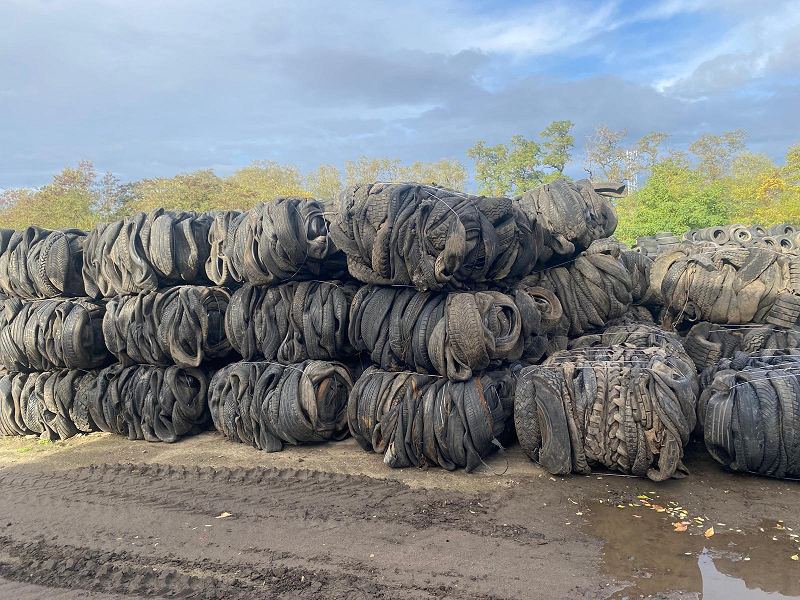
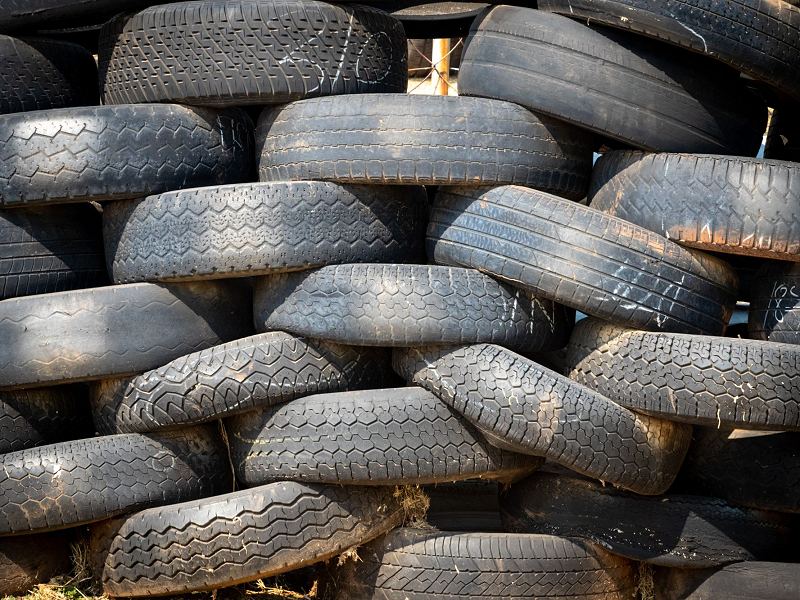
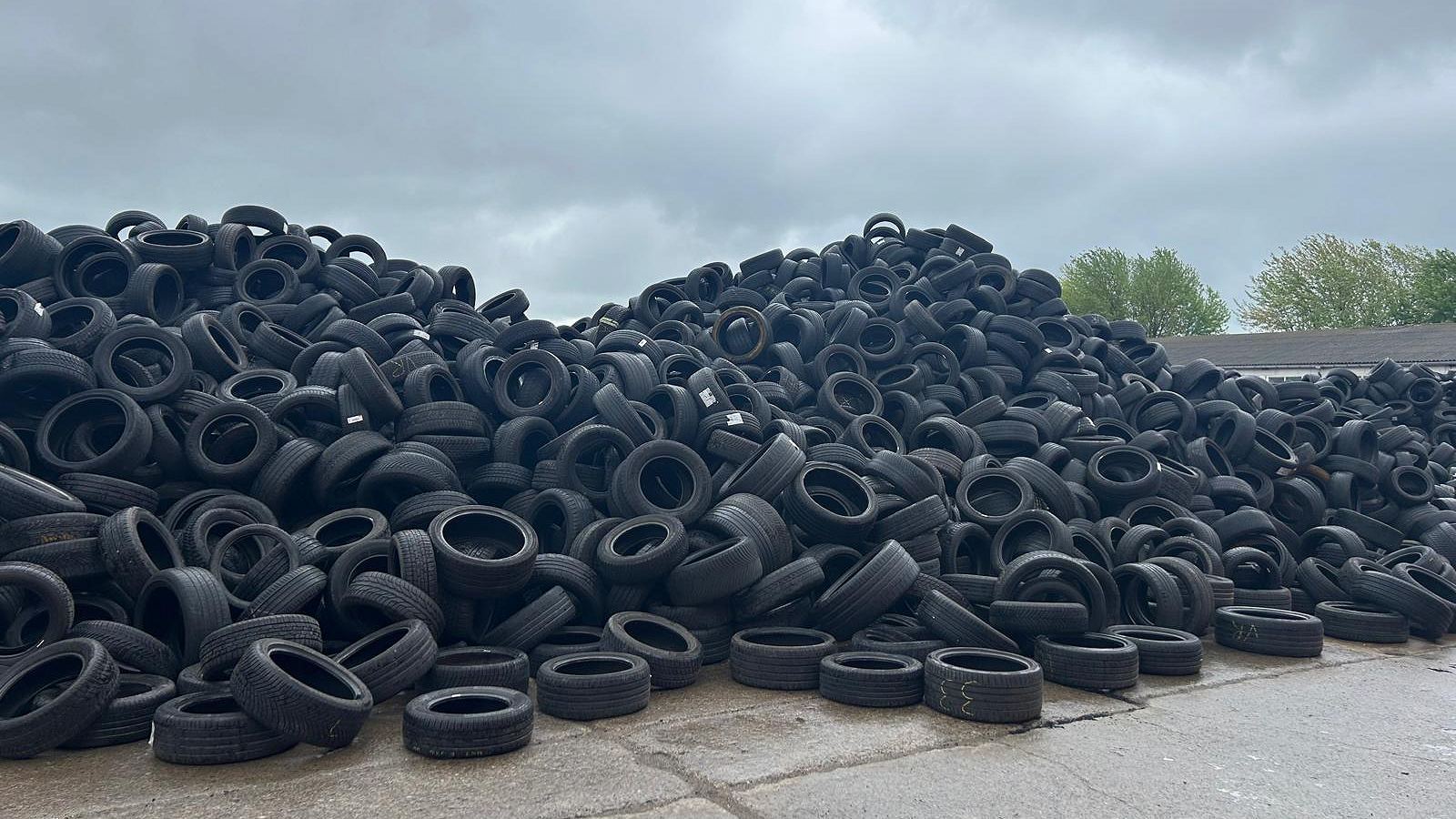
In the yard they lie side by side and look almost the same: a worn-out car tyre, a tyre with 5 mm of tread left, and a tyre whose tread is gone but whose body is still sound. To the eye that is one heap of rubber. In legal and commercial terms these are three different things: a waste tyre, a part-worn tyre and a casing.
The difference is not a formality. It decides which set of rules applies, which documents travel with the load, who may buy it at all and what it is worth. Depending on the classification, one and the same tyre can leave the yard as a waste that costs money to dispose of, or as goods that produce a sale.
Anyone who buys or sells in the tyre trade should be able to keep the three terms apart. This article explains how they differ, how sorting works in practice, and what makes a tyre fail the sort.
Waste tyres: a waste with its own rulebook
A waste tyre is a tyre that its holder no longer intends for use on a vehicle, but hands over for material or energy recovery. That makes it a waste under waste law. In the European list of waste, waste tyres sit under the waste code 16 01 03.
The classification is made by the holder, not by the buyer and not by the haulier. It follows from what is going to happen to the tyre. If it goes to a granulation plant, a pyrolysis unit, a cement kiln or any other recovery route, it is waste. If it is fitted to a vehicle again, it is not. The appearance of the tyre is secondary to this question.
Waste comes with its own rules: record and register duties, permitted receivers, and, for cross-border movements, the EU Waste Shipment Regulation (EU) 2024/1157. Among other things it governs which wastes may go to which countries and which procedure has to be completed first. The detail is covered elsewhere in this knowledge library.
- Intended route: recovery, not reuse on a vehicle
- Common EU waste code: 16 01 03 for waste tyres
- Record and register duties both on handing over and on taking in
- The receiver must be permitted to accept this waste
- Across borders the Waste Shipment Regulation (EU) 2024/1157 applies
Part-worn tyres: a product, not a waste
A part-worn tyre is used but roadworthy. It is placed on the market again so that someone fits it to a vehicle. That makes it a product rather than a waste. Ordinary product law applies: the seller is liable for the condition of the goods, and the tyre has to meet the requirements for road use.
In Germany the legal minimum tread depth for car tyres is 1.6 mm. That is the point below which a tyre may no longer be driven, not the point up to which it can be sold with a clear conscience. Serious sorting operations sell well above it, because a tyre with 2 mm is due for replacement again shortly after the end customer fits it, and comes back as a complaint.
Then there is the DOT number on the sidewall. Its last four digits give the week and the year of manufacture. Many buyers set an age limit, often between six and ten years, because rubber hardens over time regardless of how much tread is left. Age is therefore a sorting criterion in its own right, alongside tread depth.
- Intended route: reuse on a vehicle
- Minimum tread depth for road use in Germany: 1.6 mm
- The DOT code on the sidewall gives the production week and production year
- The seller is liable for the condition, as with any other goods
- No waste documents, but the usual trade and customs paperwork
Casings: feedstock for retreading
The casing is the load-bearing body of a tyre: the plies, the belts and the bead cores. In retreading the old tread is buffed off and a new one is applied. What is assessed is therefore not the remaining tread but the condition of the body.
Retreaders judge tyres differently from part-worn sorters. A tyre with 1.5 mm of tread can be a first-class casing. A tyre with 6 mm of tread can fail as a casing if it was once driven underinflated and the inside of the sidewall suffered.
Casings are usually inspected one by one, often with shearography or X-ray, because internal damage cannot be seen from the outside. Rejection follows from separations, repairs in unsuitable places, damaged bead cores or corrosion on the steel belts. The casing market is far larger for truck tyres than for car tyres, because retreading is commercially normal there.
Tread depth: the sorting line in millimetres
In practice sorting runs on tread depth, because it can be measured quickly with a simple gauge. The measurement is taken at the weakest point across the tread width, not at the best one. A tyre with 5 mm on the outer shoulder and 2 mm on the inner one is a 2 mm tyre, and also a sign that the previous owner had a suspension problem.
The grades below are common in the market. They are trade practice rather than a standard, and individual buyers draw their lines a little differently. The right-hand column describes what sector-typically happens with such goods.
| Remaining tread | Usual classification | Typical outlet |
|---|---|---|
| below 1.6 mm | Waste tyre, that is a waste | Material or energy recovery, baled goods, shred |
| 1.6 to 2.9 mm | Borderline | Mostly recovery or casing inspection, hard to sell as part-worn |
| 3.0 to 3.9 mm | Part-worn, basic quality | Price-sensitive destination markets, often Africa |
| 4.0 to 4.9 mm | Part-worn, good quality | Broad export, also European intermediate trade |
| 5 mm and above | Part-worn, top quality | Highest prices, often asked for by brand |
Summer, winter, all-season: the season moves demand
Besides tread and condition, the type of tyre decides where the goods sensibly go. Summer tyres, winter tyres and all-season tyres find very different buyers in the same destination markets.
Winter tyres out of Germany often carry a lot of tread, because they run for only part of the year. As winter tyres, however, they can only be sold where there is a winter. In warm destination markets they are simply driven as tyres with tread, which depresses the price, because the softer winter compound wears faster in heat. All-season tyres sit in between and are the easiest to place in many markets.
Then there is timing. Sorting yards in Germany take in winter tyres in spring and summer tyres in autumn, because that is when tyres are changed over. Selling therefore runs counter-cyclically to your own intake. Storing ties up capital and space. That is one reason why goods are sorted and moved promptly.
- Summer tyres: saleable in nearly every destination market, the broadest demand
- Winter tyres: plenty of tread, but paid for as winter tyres only where there is a winter
- All-season tyres: easy to place in warm markets, demand has been growing for years
- Intake in Germany is seasonal, demand in the destination market usually is not
What throws a tyre out of the part-worn sort
Tread alone is not enough. A tyre with 6 mm can still be a waste tyre. It is checked outside, inside and at the bead, and in case of doubt it goes to recovery. The reason is unsentimental: whoever resells a tyre is liable for it, and a single complaint from overseas costs more than the individual tyre was ever worth.
The following points regularly lead to rejection in practice. They are worked through during the visual inspection, usually in this order.
- Sidewall damage: cuts, bulges, kerbing marks, exposed cord
- Repairs: mushroom plugs, patches and string plugs, above all in the shoulder or sidewall
- Bead damage from careless mounting, because the bead has to seal cleanly
- Cracking and ageing, meaning fine cracks in the tread grooves or on the sidewall
- Uneven wear: one-sided wear, feathering, flat spots from locked-wheel braking
- A production date that is too old according to the DOT code, regardless of remaining tread
- Run-flat tyres, which many buyers refuse because of the mounting and inspection requirements
- Unusual or heavily mixed rim sizes in a lot, for which the destination market has few vehicles
What this means day to day
The sequence in practice is nearly always the same. The goods are looked over and split by classification, the part-worn share is then sorted by tread and type, casings are picked out, and the rest goes to recovery as waste tyres. Only then is it clear which documents each sub-lot needs and which transport route makes sense.
Anyone offering goods should therefore know beforehand what they have. A mixed load without pre-sorting is always valued by the buyer on the basis of its worst share, because the buyer carries the sorting risk. A clearly described lot gets a clear price, and as a rule a better one.
We buy sorted part-worn tyres as well as waste tyres for recovery, we sort, bale, load and take care of the accompanying paperwork. If it is unclear which category a stock falls into, a short description with photographs is usually the quickest route to a reliable assessment.
Frequently asked questions
- When does a tyre legally become a waste?
- As soon as the holder no longer intends it for use on a vehicle and hands it over for recovery. What counts is the intended route, not the appearance. A tyre with plenty of tread can be a waste if it goes to a granulator. For casings destined for retreading the answer turns on the individual case, which is why that quantity is kept apart and documented separately in practice.
- Is 1.6 mm of tread enough to sell a tyre as part-worn?
- 1.6 mm is the legal floor for road use in Germany, not a quality benchmark for the trade. In export, commercially interesting goods generally start at around 3 mm, because below that the remaining life for the end customer is too short and the complaint rate rises.
- Why are casings inspected differently from part-worn tyres?
- Because in retreading the tread is replaced anyway. What is assessed is the body: belts, plies and bead. Damage there often cannot be seen from the outside, so retreaders use inspection equipment and reject in case of doubt. Remaining tread plays almost no part in that assessment.
- What is the DOT number and why does it matter?
- The DOT code is on the sidewall. Its last four digits give the production week and the production year, so "2319" means week 23 of the year 2019. Rubber ages even without being driven. Many buyers therefore set an age limit and will not take tyres that are too old, even with plenty of tread.